
Roadmap
Project Builder is being built in levels, and the order is deliberate: each level builds on the guarantees of the one before it. Determinism comes first; composition, distribution, and orchestration only make sense once the foundation is proven.
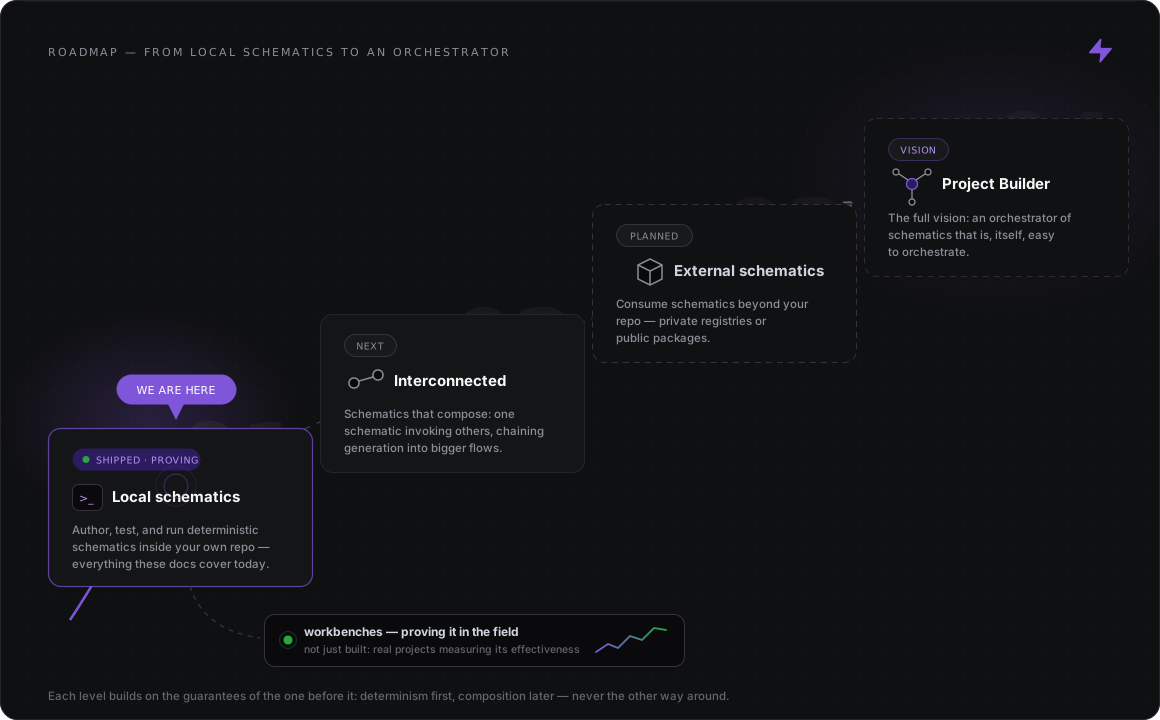
Level 1 — Local schematics (we are here)
Section titled “Level 1 — Local schematics (we are here)”Everything these docs cover today: authoring typed, testable, deterministic schematics and running them inside your own repository — the seven mutation verbs, templates, AST-aware dialects, and the in-memory testing harness.
And here’s the part that matters: level 1 isn’t just built — it’s being proven. The workbenches are real projects running real schematics, measuring effectiveness in the field before the next level starts. Done is not the bar; demonstrably effective is.
Level 2 — Interconnected schematics
Section titled “Level 2 — Interconnected schematics”Schematics that compose: one schematic invoking others, chaining generation into larger flows. The determinism guarantee extends across the chain — a composed run is still all-or-nothing, still reproducible.
Level 3 — External schematics
Section titled “Level 3 — External schematics”Consuming schematics beyond your own repository — private registries for your organization, public packages for the ecosystem. Your team’s proven patterns become installable building blocks.
Level 4 — Project Builder
Section titled “Level 4 — Project Builder”The full vision, and the name of the project for a reason: an orchestrator of schematics that is, itself, easy to orchestrate. Pipelines of generation spanning projects and teams — with the same guarantee that has held since level 1: same input, same bytes.